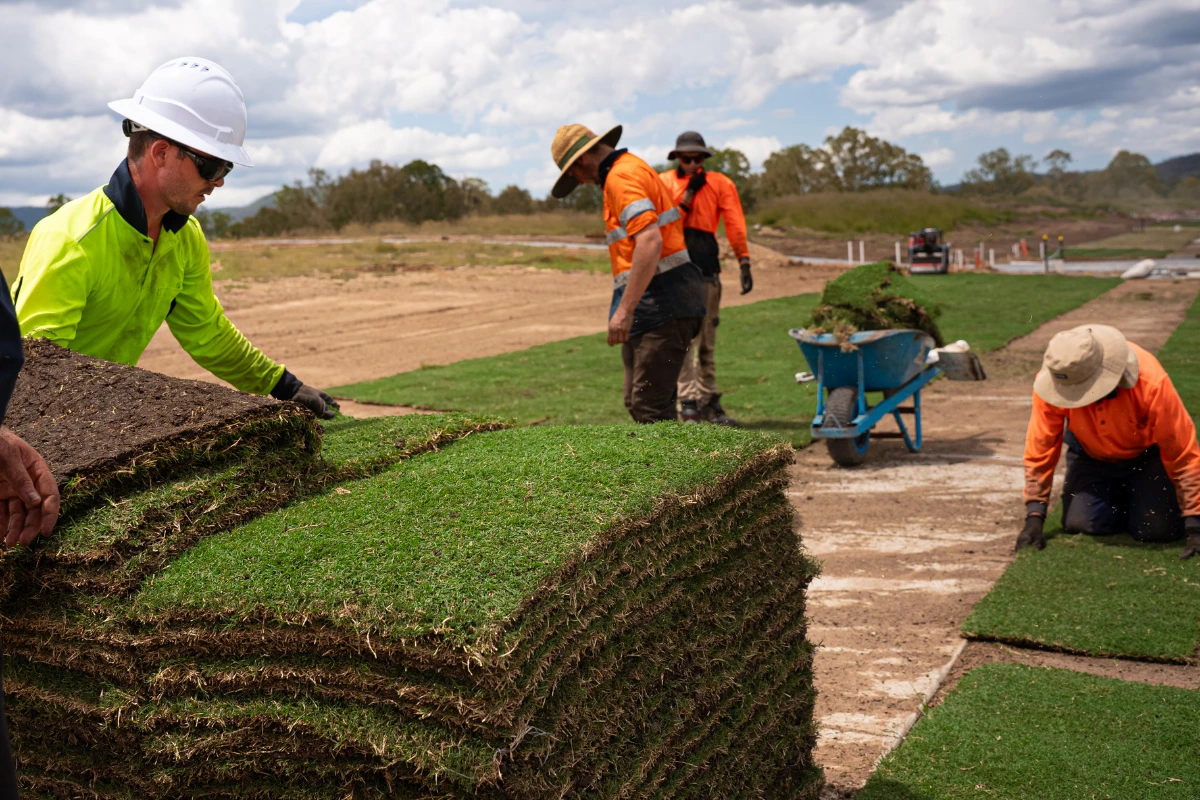
Turf is often one of the final elements installed on a commercial project.
The landscaping is taking shape, construction is nearing completion and the site is starting to look like the finished product. It can be tempting to leave turf planning until this point.
But while turf may be installed towards the end of the project, it shouldn’t be one of the last things you plan for.
For commercial landscapers, contractors, councils and project managers across Southeast Queensland, getting turf into the project program early can make a significant difference to supply, delivery, commercial turf installation and establishment.
Start planning before the site looks ready
A commercial site can look almost finished while still having several important steps to complete before turf can be laid.
Final levels may still need to be established. Soil preparation may be underway. Irrigation might not yet be commissioned. Construction traffic could still be moving through the areas that are due to be landscaped.
These details all affect when turf can realistically be installed.
That’s why turf should be considered alongside the broader construction program, rather than added at the very end.
The earlier you know when turf will be required, the easier it is to coordinate the variety, quantity, delivery and installation around the rest of the project.
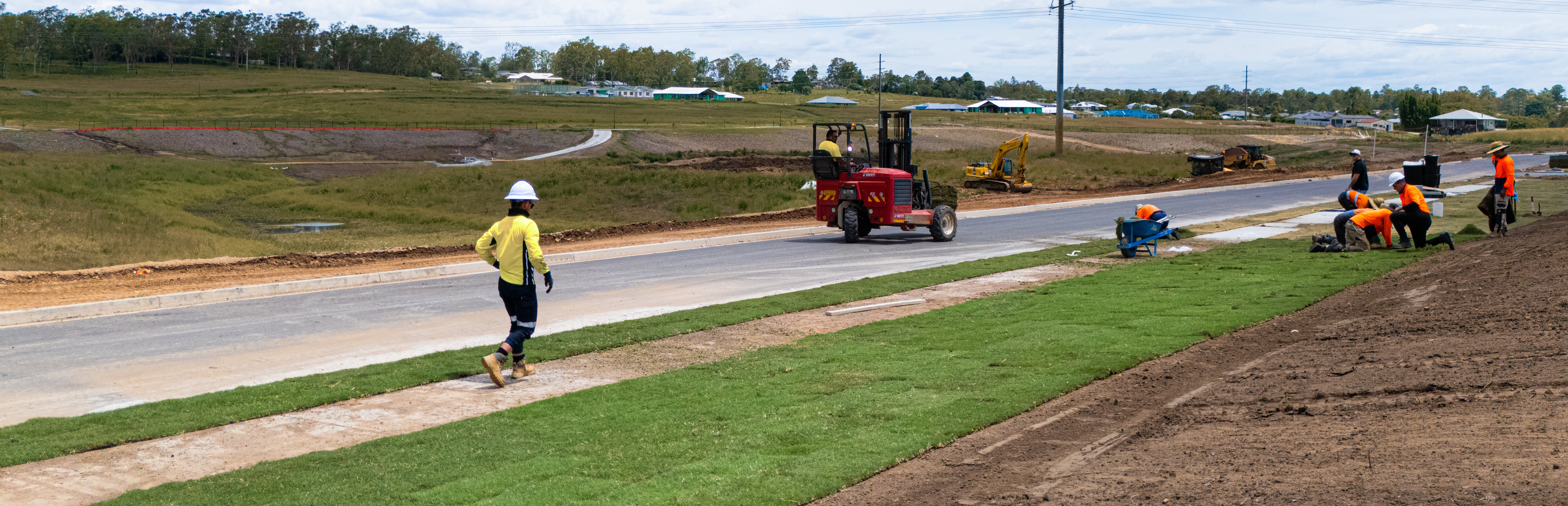
Work backwards from your project completion date
One of the simplest ways to build turf into a commercial project is to start with the target completion or handover date and work backwards.
If the finished turf needs time to establish before the site is handed over, the installation date needs to be brought forward accordingly.
Project completion → Turf establishment → Installation → Delivery → Site preparation & irrigation → Turf supply
Each stage has its own requirements, and a delay at one point can put pressure on everything that follows.
This is particularly important for projects working towards a fixed completion date. Turf establishment is a biological process, so it isn’t something that can simply be compressed at the end of a construction program.
Allenview’s project guidance notes that warm-season turf in Southeast Queensland can take around six to twelve weeks to reach full establishment, depending on the variety, season, site conditions and post-installation care.
That means the date you need the project finished should help determine when the turf needs to be installed, and when you need to start planning its supply.
What happens when turf planning starts too late?
Leaving turf until the final stages of a project can create unnecessary pressure.
You may find the preferred turf variety isn’t available for the exact date you need. A delivery has to be fitted around other trades. The site is technically finished, but access for the delivery vehicle is restricted. Or the turf arrives before the installation crew or irrigation system is ready.
None of these issues are particularly difficult to manage when they’re identified early. But they do become much harder when the turf is needed immediately.
Spring, in particular, brings ideal growing conditions for warm-season turf, but it can also be a busy time for commercial turf projects across Southeast Queensland. Getting your turf requirements planned early gives you greater flexibility when it comes to supply, delivery and project scheduling.
The site needs to be ready for turf, not just nearly finished
Good turf establishment starts before the turf arrives.
The site should have reached the appropriate stage of preparation, with final levels established and the growing surface ready to receive the turf.
Soil preparation is particularly important. Compacted or poorly prepared ground can restrict root development, affect drainage and create problems that continue well beyond installation.
Irrigation also needs to be considered early.
Newly laid turf needs consistent moisture while its roots establish, so an irrigation system should be installed, operational and capable of providing suitable coverage before the turf goes down.
The goal is simple: when the turf arrives, the site should be ready to lay it, water it and protect it.
Think about what’s still happening around the site
A common challenge on commercial projects is that turf can be ready before the rest of the site is.
If heavy machinery, vehicles or other trades still need access across a newly landscaped area, it may make sense to delay turf installation until those activities are complete.
Turf is a living product, and newly installed turf is particularly vulnerable to disturbance while it is establishing.
Planning its installation around the wider construction schedule helps avoid unnecessary damage, rework and additional maintenance.
It also means thinking beyond the exact area being turfed. Consider access routes, unloading areas and where equipment will need to move once the landscaping is complete.
Your turf supplier should be part of the project conversation
Turf supply shouldn’t be a last-minute phone call once the site is ready. Once you have an idea of your project timeline, it’s worth discussing your turf requirements with your supplier.
That might include:
- The turf variety or specification
- Approximate square metre requirements
- Expected installation timing
- Preferred delivery dates
- Site location and access
- Whether deliveries need to be staged
- Any specific project or establishment requirements
The earlier these details are discussed, the more opportunity there is to plan around the project rather than react to it.
Allenview supplies a range of turf varieties for commercial applications across Southeast Queensland, including Empire Zoysia, Wintergreen Couch, Stadium Sports Couch and Palmetto Soft Leaf Buffalo. The right choice will depend on the conditions and intended use of the site.
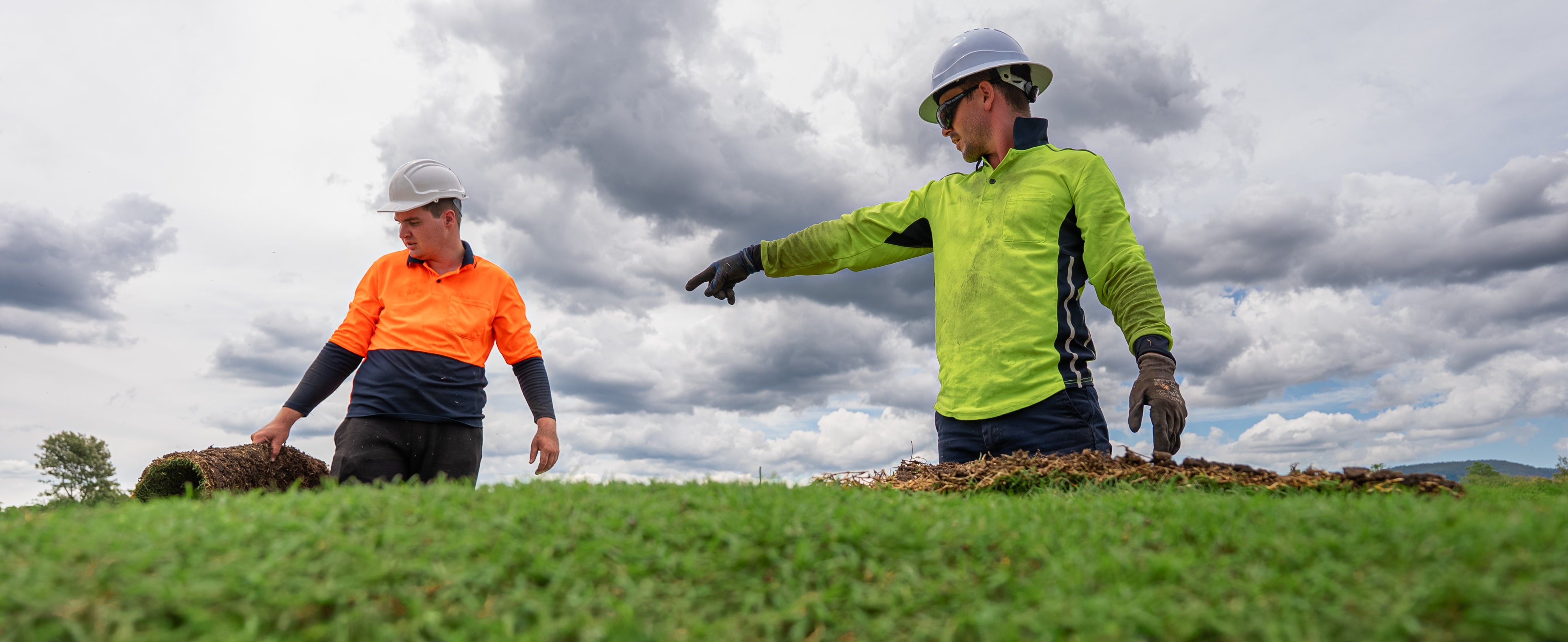
Delivery and installation need to work together
For commercial projects, getting the turf to site is only part of the equation.
The delivery needs to line up with the installation team, site access and the condition of the site.
Turf should be installed and watered as soon as practical after delivery, particularly during warmer conditions. Allenview can accommodate large commercial deliveries, with capacity of up to 1,260m² on a full truck, as well as staged delivery arrangements for larger projects. Its pallet-less delivery system and Moffett forklifts can also assist with placing turf close to the laying area where site conditions allow.
Planning these logistics ahead of time helps keep the installation moving once the turf arrives.
Spring is the time to get your turf plans moving
Spring brings warmer conditions and increasing daylight across Southeast Queensland, creating good growing conditions for warm-season turf. But successful establishment still depends on having the right conditions in place from the day the turf arrives.
For commercial projects, that means working backwards from your completion date and allowing enough time for site preparation, turf supply, delivery, installation and establishment.
Getting these elements into the project schedule early gives you more flexibility around turf selection and supply, while helping avoid last-minute pressure when the site is ready to be landscaped.
Turf may be one of the final elements installed, but it shouldn’t be one of the final things planned.
Planning a commercial turf project?
If you’ve got a commercial project coming up across Southeast Queensland, talk to the Allenview Turf team early about your turf variety, quantities and delivery requirements.
We’ll help you plan your turf supply around your project, so everything is ready when it’s time to lay.