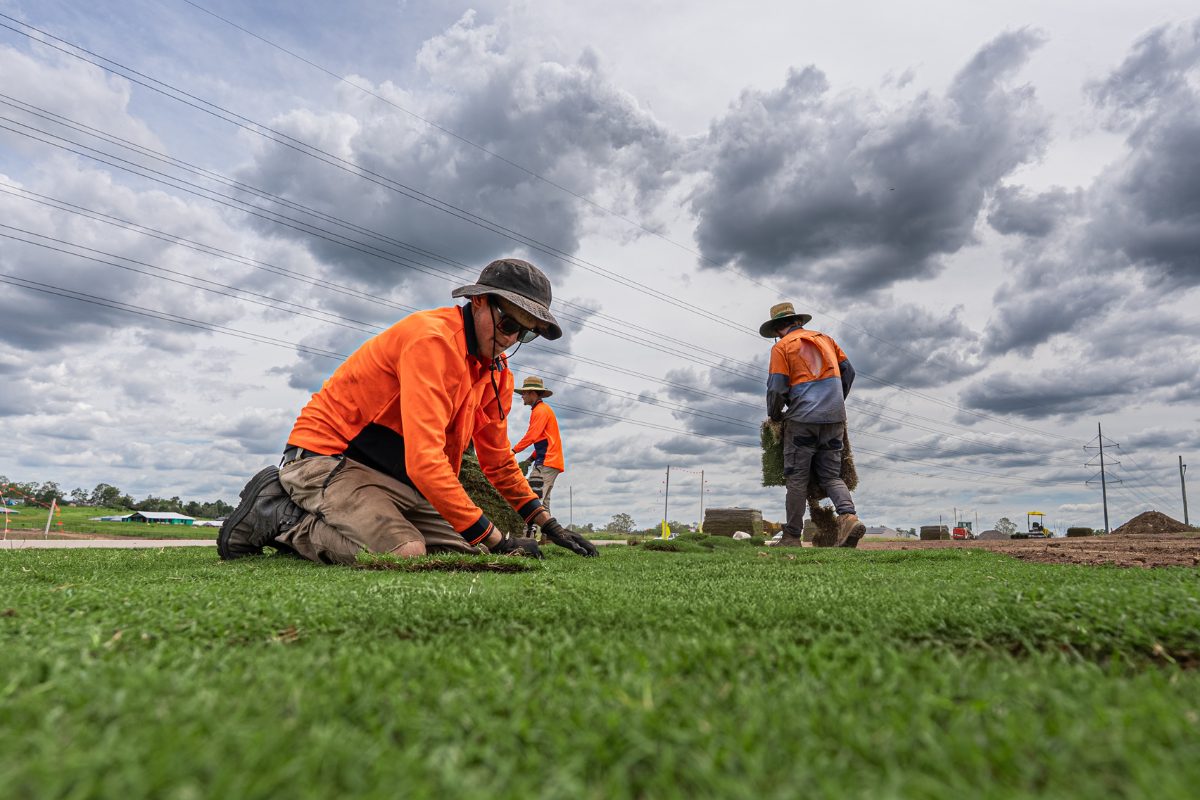
Maintenance budgets across local government are under more pressure than ever. When the conversation turns to managed turf, whether that’s roadside verges, parks, sports fields or civic spaces, the recurring costs of watering, fertilising and chemical applications add up quickly, and they’re often the first thing a finance team wants to cut. The good news is that a well-designed low-input turf system can genuinely deliver those reductions without sacrificing the standard of presentation or function that the community expects.
This isn’t about doing less. It’s about making smarter decisions upfront so that your turf requires less intervention over the long term.
It Starts With Variety Selection
The single biggest lever a council has in reducing ongoing turf maintenance costs is the variety it selects at the time of establishment. A turf variety that’s well-matched to its environment will always outperform one that’s fighting against local conditions, and that performance gap translates directly into input costs.
In Southeast Queensland’s climate, warm-season grasses are the obvious starting point for any low-input strategy. They’re genetically suited to the heat, tolerate dry periods better than cool-season alternatives, and slow right down in winter rather than demanding year-round maintenance. Within the warm season category, though, there’s a significant spread in how much water, fertiliser and mowing each variety actually needs. Allenview Turf grows and supplies four varieties, each of which has genuine low-input credentials depending on the application.
Wintergreen Couch is the primary recommendation for councils and public land managers looking to reduce maintenance costs across verges, nature strips, parks and utility turf areas. It’s among the most drought-tolerant grasses available, with a deep root system that supports wear tolerance without heavy intervention. It goes dormant in winter, which means minimal watering or mowing demands during the cooler months, and it remains one of the most affordable and cost-efficient options in the market for full-sun applications. For councils managing large areas of functional turf where cost efficiency is the central driver, Wintergreen is a reliable, proven choice.
For sports fields and higher-use recreation areas, Stadium Sports Couch offers a step up in performance while remaining a practical low-input option. It’s bred to maintain its appearance with less care, stays darker green under low fertiliser inputs compared to other couch types, and has a lower mowing frequency requirement with less scalping than comparable varieties. Its slower leaf growth relative to its runner growth means the turf recovers well from wear without demanding the same volume of mowing cycles. For a council managing multiple sports fields, those reduced mow cycles add up to real savings across a season.
Empire Zoysia suits councils where presentation is the priority over scale. It performs best as a showpiece variety — entranceways, civic gardens, feature green spaces and high-visibility areas where the quality of the finish matters and the area under management is contained. Empire requires only around one-third of the mowing of other commercially grown turf varieties, holds its appearance well under reduced irrigation, and competes strongly against weeds from establishment. It’s not the right fit for broad open spaces or high-area utility applications, but for the right site, its low ongoing input requirements make a strong case.
Matching the right variety to the right site is the foundation on which everything else is built, and the team at Allenview Turf has the expertise to help with this decision.
Soil Preparation and Establishment
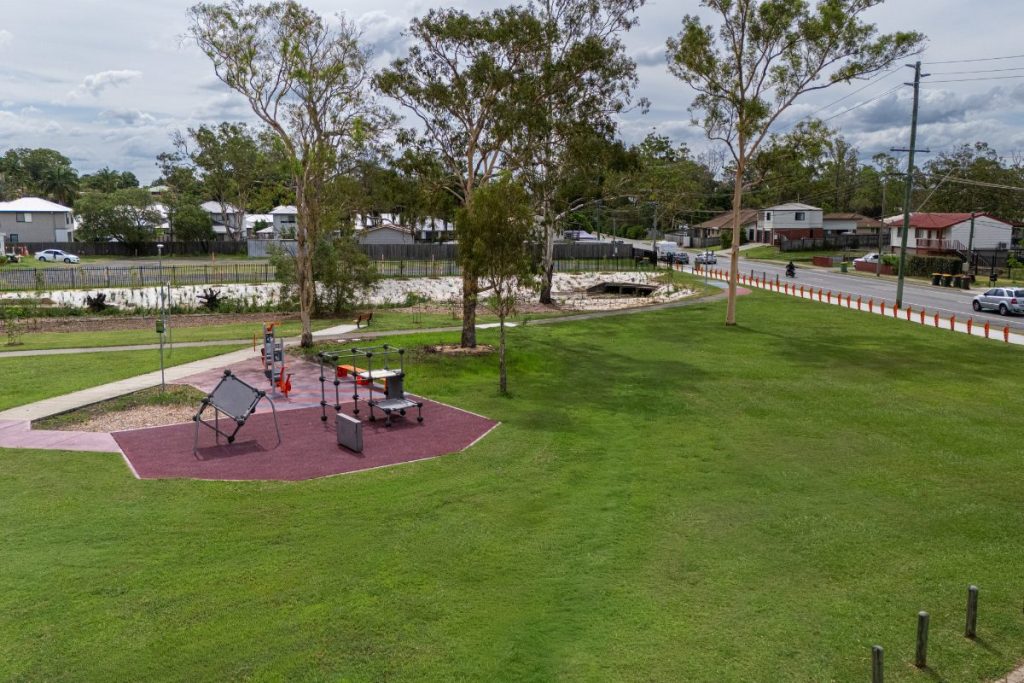
A turf system that’s established properly will need less corrective intervention later. This is particularly relevant for councils managing multiple sites, where poor establishment at the start creates ongoing maintenance headaches that compound over time.
Soil testing before laying should be standard practice, rather than optional. Understanding the nutrient profile, pH and soil structure of a site allows you to address deficiencies once at establishment rather than attempting to correct them through repeated fertiliser applications after the fact. Similarly, addressing drainage issues before turf goes down prevents the waterlogging and disease pressure that drives chemical use on poorly drained sites.
Appropriate soil preparation at the start has a real return on investment, even if it adds to upfront costs.
Irrigation Management
For councils with irrigated turf assets, irrigation scheduling is one of the most immediate opportunities to reduce water consumption without any change to the turf variety or presentation standard. Many irrigation systems across council-managed sites are still running on fixed schedules set years ago, regardless of what the weather or the soil is actually doing.
Moving to soil moisture-based or evapotranspiration-based scheduling — where irrigation responds to actual demand rather than a calendar — consistently reduces water use on managed turf sites. The savings vary by site and climate, but reductions of twenty to forty percent compared to fixed-schedule irrigation are commonly reported in local government contexts. For councils that haven’t yet reviewed their irrigation scheduling approach, this is a low-cost first step that doesn’t require any capital expenditure. Just a little brain power!
Where irrigation infrastructure is being renewed or installed on new sites, subsurface drip systems deliver water directly to the root zone with minimal evaporation loss. They represent a higher upfront investment but deliver long-term water savings that are difficult to achieve with surface spray systems.
Fertiliser Reduction Through Variety Choice and Soil Health
Turf varieties differ significantly in their fertiliser requirements, and this has a practical impact on how often and how much a council needs to apply across its maintained areas. Stadium Sports Couch is specifically bred to stay darker green under low fertiliser inputs than other couch types, meaning councils can achieve the presentation standard they need without the same application frequency. Wintergreen Couch similarly holds its colour and density through the active growing season without heavy nitrogen demands, and its winter dormancy removes the fertiliser requirements that year-round green grasses carry through the cooler months.
Beyond variety selection, building soil biology over time reduces the need for synthetic inputs. Soils with good organic matter and microbial activity make nutrients more available to the plant naturally, which means applied fertiliser goes further. Compost incorporation at establishment and the use of slow-release rather than soluble fertiliser products are practical steps that reduce the frequency and volume of applications needed over a site’s life.
For council sites that are currently on a blanket fertiliser schedule applied uniformly across all areas regardless of condition, moving to a needs-based approach informed by periodic soil testing and visual assessment typically reduces total fertiliser spend without any negative effect on turf quality.
Reducing Chemical Use
Herbicide and pesticide costs on council turf sites are often driven by weed and pest pressure that’s a symptom of underlying turf health rather than an unavoidable cost of doing business. Thin, stressed or poorly established turf is simply more vulnerable to weed invasion and pest damage than dense, healthy turf that’s appropriate for its site.
A dense-canopy variety that establishes quickly and outcompetes weeds reduces the need for reactive herbicide applications over time. Both Wintergreen Couch and Stadium Sports Couch establish strongly and build competitive canopy density under good preparation conditions. Pre-emergent herbicide applied at the right time, typically before weed germination windows in spring and autumn, is a far more cost-effective approach than repeated post-emergent treatments once weeds are already established.
Reducing chemical use also has practical benefits beyond the direct cost saving. It reduces contractor and staff chemical handling requirements, simplifies record-keeping obligations, and is increasingly relevant to councils responding to community expectations around chemical use in public spaces.
Taking a Whole-of-Life View
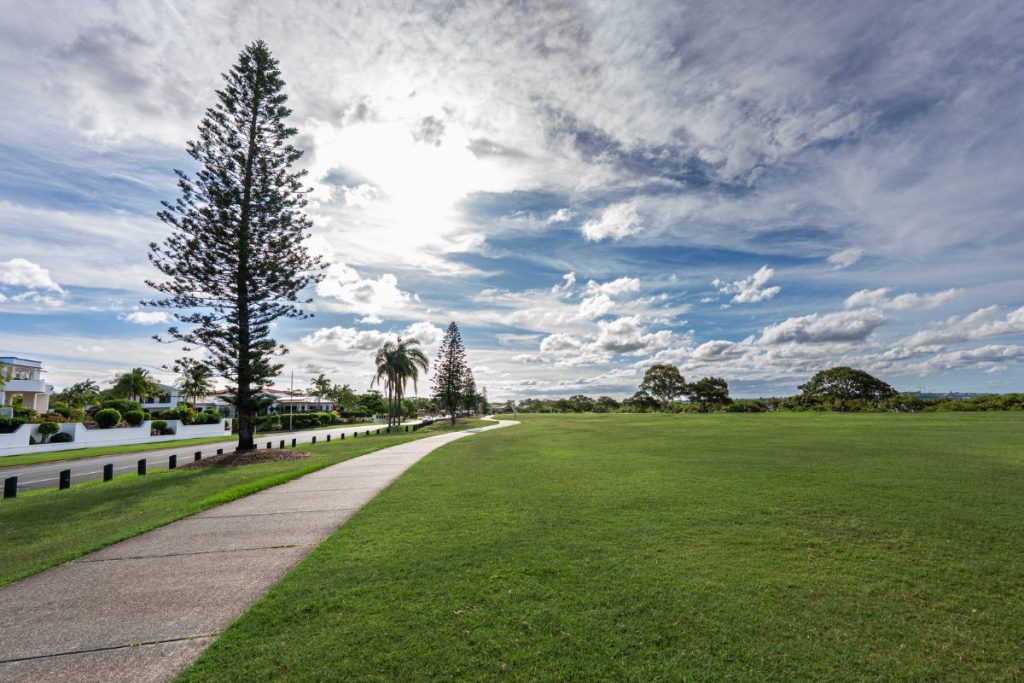
The challenge for councils in adopting low-input turf systems is that the decisions with the biggest long-term impact — variety selection, soil preparation, irrigation infrastructure — are made at the point of establishment and require upfront investment or specification. The savings accumulate over years, not weeks, which can make them harder to justify against a capital budget under scrutiny.
The most effective approach is to quantify the ongoing maintenance costs associated with current turf on existing sites and apply that data to new establishment decisions. If a council can demonstrate that a particular variety or system approach reduces annual maintenance spend by a calculable amount over a ten or twenty-year asset life, the whole-of-life case for a better upfront decision becomes straightforward to make.
Allenview Turf works with councils and commercial clients across Southeast Queensland on turf specification for exactly these kinds of projects. If you’re reviewing managed turf on your site or planning new green space development, get in touch with the Allenview team to discuss the right variety for your application.