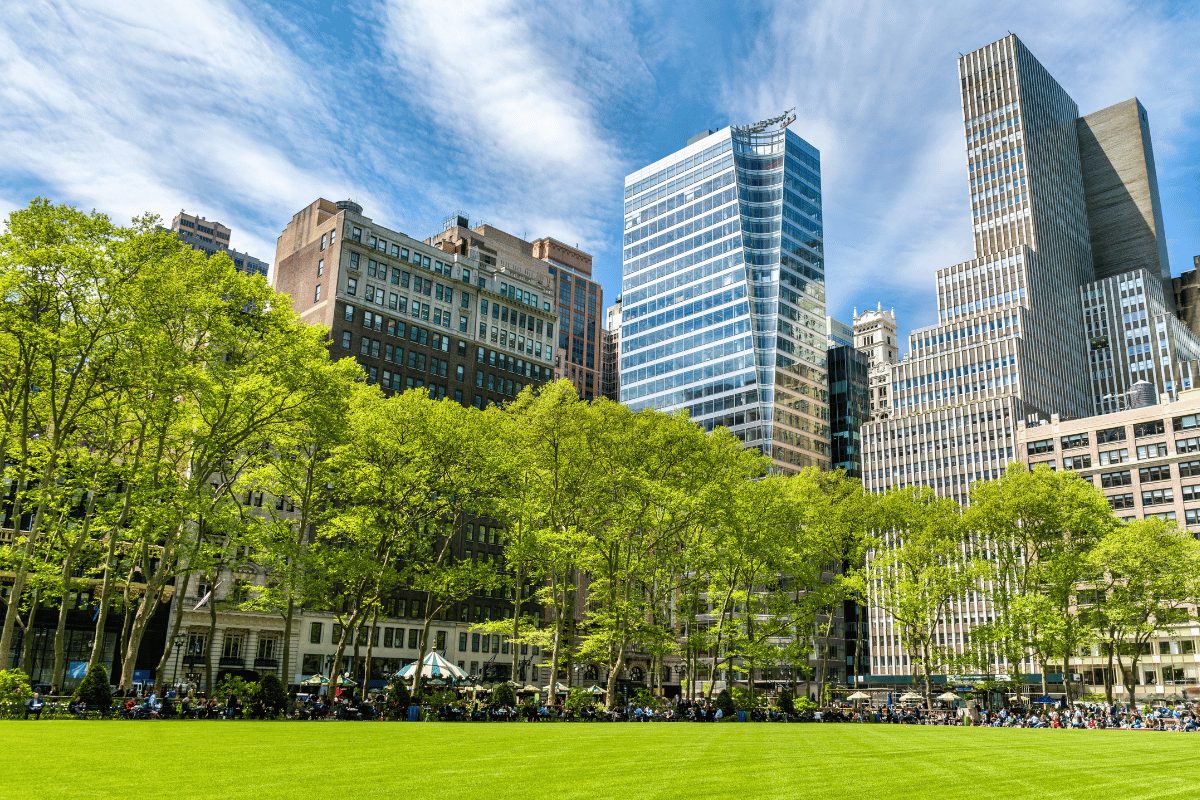
As South East Queensland’s urban areas continue to increase in density, the need to create cooler, healthier, more climate-resilient public spaces is mounting. Heat stress, declining green cover, and rising maintenance costs all challenge sustainable urban management, yet one solution continues to deliver proven value across parks, streetscapes, and sports assets: well-managed natural turf.
While trees often dominate the urban greening conversation, turf plays an equally important but sometimes overlooked role in cooling our cities and improving local climate resilience. Here’s why more councils are reconsidering turf as essential green infrastructure, and how species like WinterGreen Couch support long-term sustainability goals.
The Cooling Power of Turf
Urban heat islands form when hard surfaces like asphalt, synthetic turf, and concrete absorb and radiate heat. Natural turf works differently. Through a process called evapotranspiration, a healthy turf surface actively releases moisture, dramatically lowering surrounding air and surface temperatures.
Key benefits include:
Lower Surface Temperatures
Research consistently shows that natural turf can be 15–20°C cooler than asphalt and 25–35°C cooler than synthetic turf during peak summer conditions. This is critical in high-use public spaces such as playgrounds, sports fields, and community hubs, and is particularly important in that warm Queensland weather.
Cooler Microclimates for Communities
Turf not only cools the surface itself, it also cools the air around it. This supports comfort for park users, reduces heat stress risks in vulnerable populations, and improves the usability of open spaces throughout hotter months.
Reduced Heat Load on Built Assets
By lowering ambient temperatures, turf helps reduce cooling demands for neighbouring buildings and alleviates stress on adjacent infrastructure such as pavements and park furniture.
Turf as a Climate Resilience Tool
Beyond cooling, turf provides ecosystem services that strengthen council resilience strategies. A dense turf canopy and root structure aids in promoting infiltration, slowing runoff, reducing erosion, and improving water filtration in stormwater management. This is especially valuable during the high-intensity rainfall events increasingly common in the Southeast Queensland region. Well-managed turf systems also assist with carbon sequestration, as they capture and store carbon in the soil. Varieties with fine, fibrous root systems, such as couch grasses, are especially good at this. On top of this, turf provides biodiversity support as a habitat for soil organisms, supports urban ecosystems and enhances overall green-space quality when paired with trees and shrubs.
The best urban cooling strategies combine the shade from trees, evapotranspiration from turf, permeable, living ground cover and a reduction in hard surface area. This layered approach creates cooler, more resilient public spaces without relying on resource-intensive alternatives.
Why WinterGreen Couch Stands Out for Councils
As the most widely used couch grass across South East Queensland sports fields and open spaces, WinterGreen Couch continues to prove its value in council environments.
Reliable Traits for Urban Cooling & Resilience
-
Dense, fine leaf structure improves evapotranspiration efficiency.
-
High wear tolerance suits sports fields and high-traffic community areas.
-
Fast recovery reduces downtime after events or weather impacts.
-
Drought efficiency lowers inputs in water-restricted conditions.
-
Consistent year-round colour maintains amenity across high-profile spaces.
Councils consistently choose WinterGreen because it delivers predictable performance with lower total lifecycle costs, supporting both sustainability and operational budgets.
To maximise cooling and resilience outcomes, councils should prioritise natural turf in playground buffers, sports precincts, and community gathering spaces, whether that is for a new project or a refurbishment. It is recommended that councils consider replacing underperforming synthetic surfaces in hot spots with high-wearing natural turf, for both the longevity and overall appeal of the space. When investing in natural turf in public spaces, it is also important to consider irrigation efficiency upgrades, such as smart controllers or soil moisture sensors, to ultimately save on the cost of water and human resources. As the wider public is becoming increasingly aware of the human and environmental health benefits that natural turf offers, we are seeing an increase in the integration of turf into council climate adaptation plans and green-infrastructure strategies. Over recent years, community support for turf in public spaces has been strengthening, particularly as councils communicate the benefits to their stakeholders. We highly encourage all councils and developers to continue to educate and inform communities on this information.
Greener Cities Start at Ground Level
As local governments look for practical, evidence-based ways to cool their communities and build climate resilience, turf remains one of the most effective, low-input solutions available. For councils balancing sustainability targets with budget constraints, species like WinterGreen Couch offer a dependable, scalable way to deliver greener, cooler and more liveable urban environments.
If you need a turf partner, that can deliver on time, farm fresh turf every time, talk with the Allenview team today.
(07) 5543 2921